





Choose heating suited to your bathroom
Start with the purpose: heating the whole room, adding comfort during use, or drying towels. Room dimensions, insulation, ventilation and the permitted mounting position matter as much as appearance. Compare the options below before choosing output and controls.
Request advice for your bathroom. Prepare the dimensions, ceiling height, insulation details and a photo of the room.

Compare bathroom heating options
| Option | Main purpose | Check before choosing |
|---|---|---|
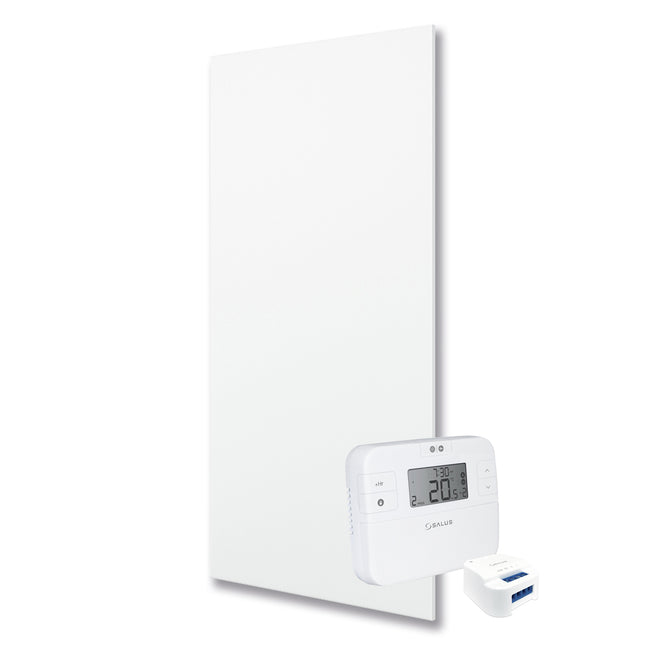
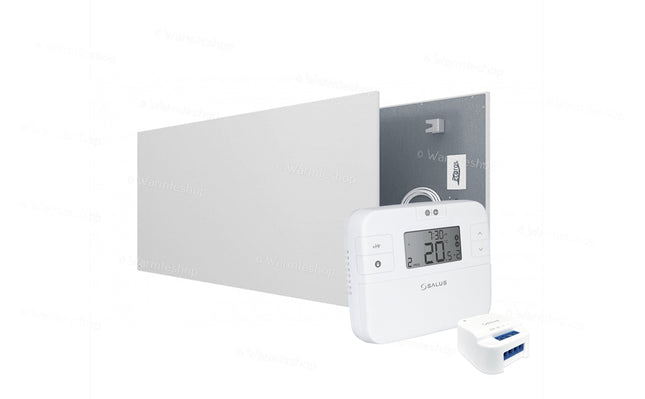
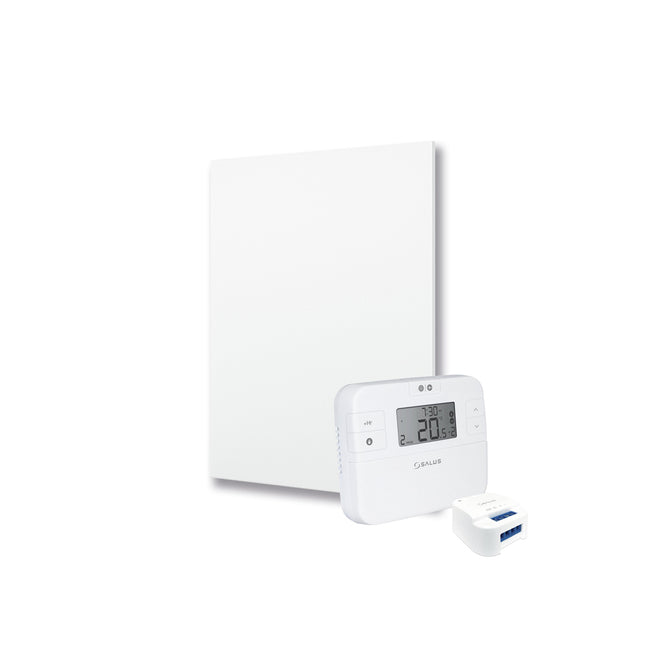
| Infrared panel | Radiant warmth directed towards the occupied area. | Output, clear coverage and wall or ceiling mounting permitted for the model. |
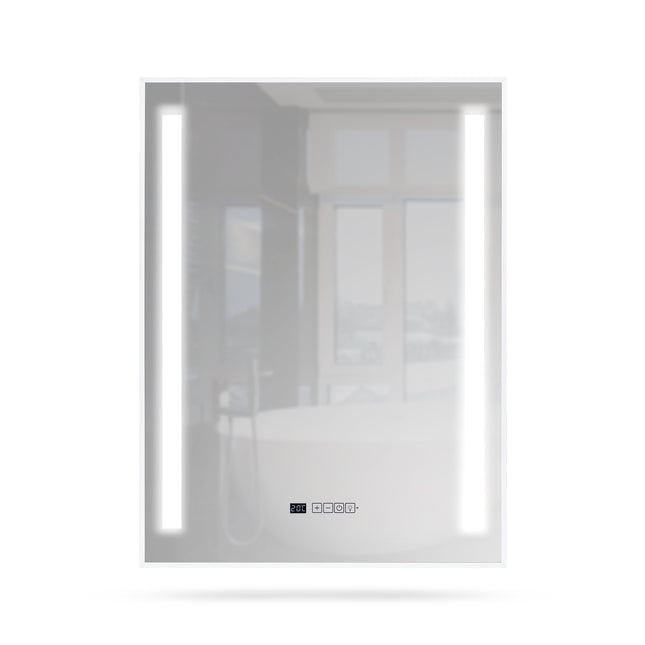
| Heated mirror | Combine a mirror with a heated surface. | Dimensions, output and whether it provides primary or supplementary heating. |
| Electric towel radiator | Warm or dry towels. | Actual room-heating capacity beyond the towel-warming function. |
| Electric underfloor heating | Warmth from the floor while keeping walls free. | Available clear floor area, floor construction and suitable controls. |
To combine ceiling heat and light, compare infrared panels with LED lighting. Consider light output, colour temperature and controls as well. An existing lamp position alone does not establish that a heating panel can be fitted there.
Primary or supplementary heating?
For primary heating, the total output must cover the bathroom’s heat loss. For supplementary heating, identify the occupied area and times when warmth is needed. A low-output towel warmer does not automatically replace heating for the whole room.
Measure length, width and height, and note glazing, outside walls, insulation, ventilation and the target temperature. A fixed watts-per-square-metre figure is only an estimate. Have heat loss assessed before choosing primary heating, especially where suitable wall or floor space is limited.
Position, IP rating and electrical connection
The manufacturer must permit the product for the intended use and mounting position. Requirements around baths and showers depend on the country and installation. An IP rating alone does not authorise placement anywhere in the bathroom.
Follow the model’s manual and have the position, power supply, protective measures and connection checked by a qualified professional. Keep the specified clearances and ensure the support can carry the heater. For ceiling mounting, choose only a model explicitly intended for that position. See our installation service when preparing your project.
Ventilation, controls and consumption
Heating does not replace ventilation: moisture must be removed from the room. Persistent condensation also calls for checking inadequate ventilation, leaks or thermal bridges. More heating does not guarantee that mould will disappear.
Choose a thermostat and controls compatible with the heater and total load. A programme can follow bathroom use times; check where the temperature is measured. Wi-Fi control is not automatically included with every model.
Consumption is actual power input in kW × operating hours = kWh. A 1 kW heater running continuously for one hour uses 1 kWh. Multiply by your electricity tariff to calculate cost. Heat loss and thermostat operation determine the actual running time; this example does not predict daily consumption.
Prepare a useful advice request
- Provide room dimensions, insulation, glazing and intended use times.
- Specify primary heating, supplementary warmth, a mirror or towel warming.
- Include a room photo showing the shower, bath, basin and proposed mounting positions.
- Describe existing heating and controls, and any planned renovation.
Have output and positioning assessed. The calculator on that page currently operates in Dutch. You can also use the contact page for your enquiry.
Frequently asked questions
Can a towel radiator heat the whole bathroom?
Only if its room-heating output covers the calculated heat loss. Check model specifications rather than size alone.
Can any infrared panel be ceiling mounted?
No. The model must be explicitly permitted for ceiling mounting, and the support, clearances and electrical zone must suit the installation.
Does heating solve condensation?
Warmer surfaces can help, but effective ventilation and investigation of moisture sources remain necessary.