




Choosing a thermostat for electric heating? Start with your heater’s connection. Then choose wired or wireless controls and decide whether you want internet access. A WiFi feature alone does not tell you which receiver or electrical connection is needed.
Wired and wireless: two different connection routes
- Wired thermostats with WiFi: for electrically connected controls. Check the supply, output type and permitted load.
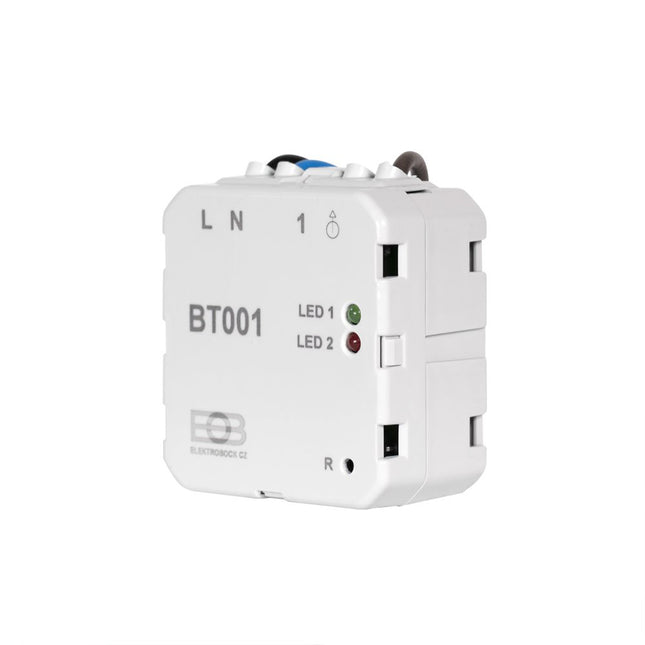
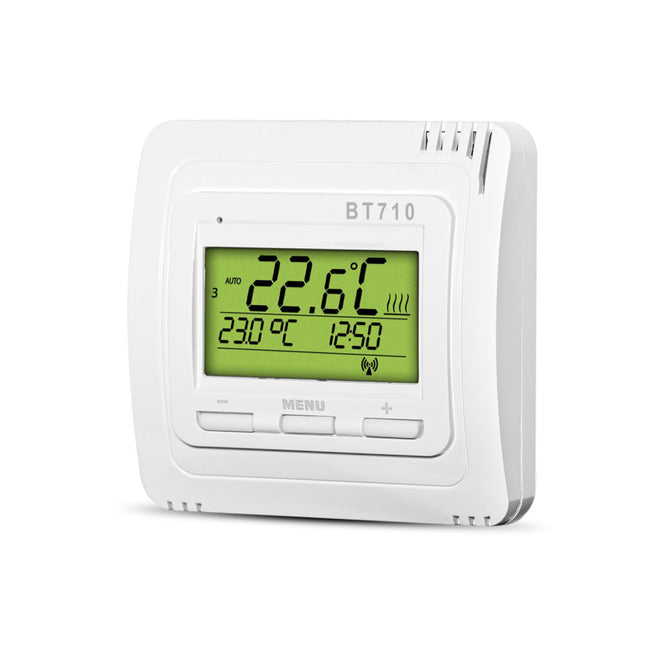
- Wireless thermostats with WiFi: the room thermostat communicates with a compatible receiver. That receiver still needs power and a connection to the heater.
WiFi and the receiver link serve different purposes
The connection to your home network or app differs from the link between thermostat and receiver. Check each model for built-in WiFi or a required gateway, supported networks and locally available functions. A wireless kit is not automatically a WiFi kit.
Two examples from the range
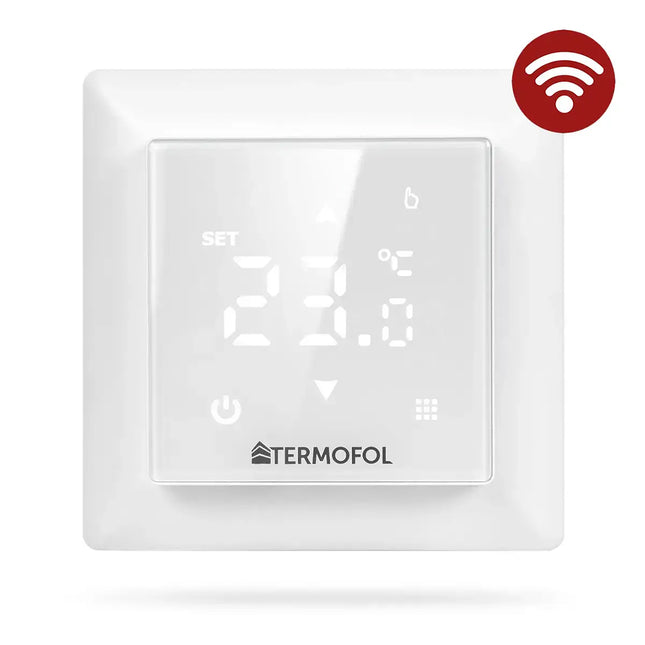
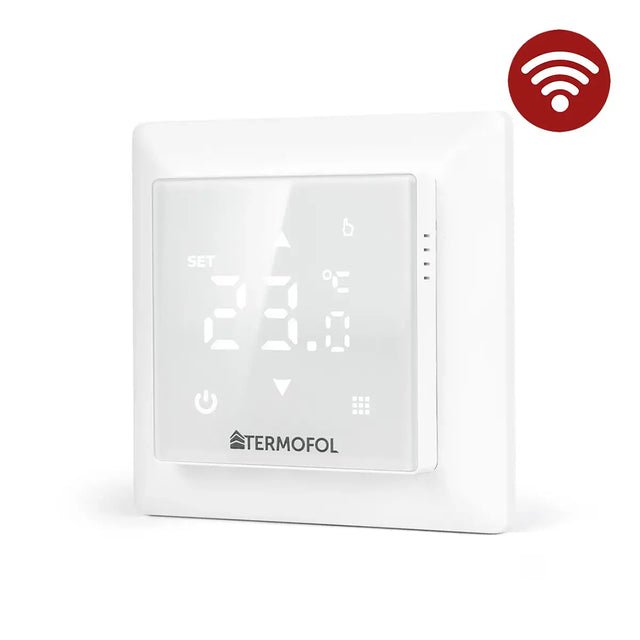
- Termofol TF-H6-WiFi-White: a flush-mounted thermostat. Check the connection, sensor setting and suitability for your heating system.
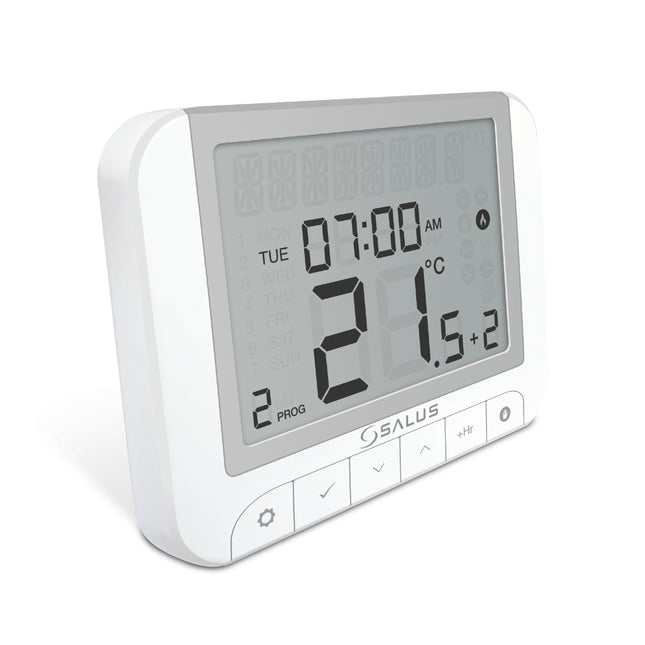
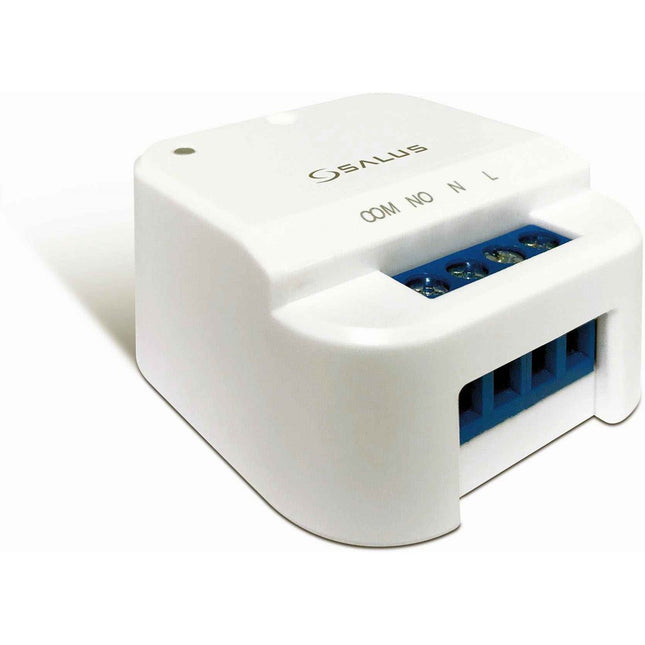
- SALUS WQ615RF thermostat kit: the description lists a WQ615TX thermostat and WQ615RX receiver. When expanding it, check the exact receiver model and permitted configuration.
Check compatibility before ordering
- Note the brand, model and total output of the heaters to be controlled.
- Check the output type and maximum load for the application. The same voltage or radio frequency does not guarantee compatibility.
- Check whether you are buying a thermostat, receiver or complete kit.
- For several panels, have receivers, total load and room controls assessed together.
- Have an installer determine the supply, wiring and any additional switching equipment.
For a heater with integrated controls, explore infrared panels with a thermostat. For warmth just at your workspace, desk heating with a dimmer serves a different purpose.