
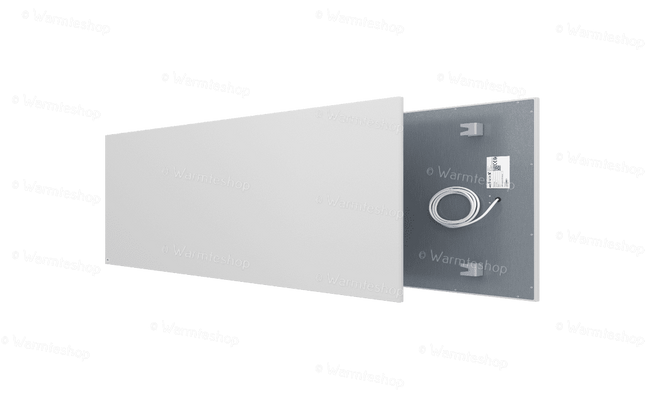
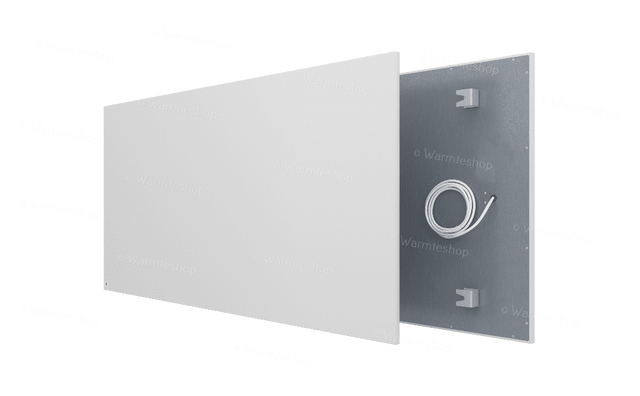
Choosing metal infrared panels? Compare the required output, mounting position and controls first. The metal finish determines the appearance; it does not automatically make a panel suitable for every room or mounting method. To compare metal with glass, mirrors and other finishes, see all infrared panels.
Wall or ceiling: check the exact model
A metal front does not tell you which mounting methods are permitted. Check whether the product allows wall or ceiling mounting in your chosen orientation. Review its dimensions, weight, compatible brackets and required clearances. Furniture, curtains and lighting can obstruct radiant heat reaching your seat or workspace.
To keep the walls free, use the ceiling panel guide. Assess the available space and supporting structure before choosing a size. To combine heat and light, compare infrared panels with LED lighting separately. A lighting frame will not fit every metal panel.
Choose the output for your intended use
For a seat used for short periods, consider the reach of the radiant heat and how long you use it. Heating the entire room also depends on heat loss, insulation, glazing, ventilation and the desired temperature. Main heating needs a room-by-room assessment; floor area or a high wattage alone cannot confirm suitability.
A panel radiates heat to people and surfaces within its reach. The warmed surfaces eventually warm the air too. Metal therefore does not guarantee a particular saving, a fixed warm-up time or a dust-free room.
Which thermostat and accessories are needed?
Check whether the product has a built-in or supplied thermostat, or needs external controls. In a wireless system, the thermostat and receiver must be compatible. Maximum switching capacity, the number of panels and the supplied components matter too. A Wi-Fi label does not mean every control you want is included.
Browse thermostats and controls and have the combination checked before ordering separate accessories.
A metal panel in the bathroom?
A metal casing alone does not prove moisture resistance or suitability for the intended position. Check the model's IP rating, manual and connection method. Have the location and electrical connection assessed if you are unsure. If you want to combine a mirror with heating, see infrared mirrors.
Calculate consumption without a savings promise
Power in kW × active heating hours = consumption in kWh. A 600 W panel heating continuously for two hours uses 0.6 × 2 = 1.2 kWh. At a fictional example rate of €0.30/kWh, that costs €0.36. Your own tariff and actual running time determine the cost. A thermostat switches according to the heating demand; this example does not predict your daily or annual consumption.
Prepare your request for advice
- Note the room's length, width and height.
- Describe the insulation, windows, desired temperature and usage times.
- Explain whether you need supplementary or main heating.
- Add a sketch or photos of the proposed wall or ceiling.
- List any existing thermostats and the controls you would like.
Compare the products below and request heating advice for a proposal covering output, layout and controls. For a particular finish, explore RAL colour panels or photo-print panels. Check the available models and mounting options for each finish.