
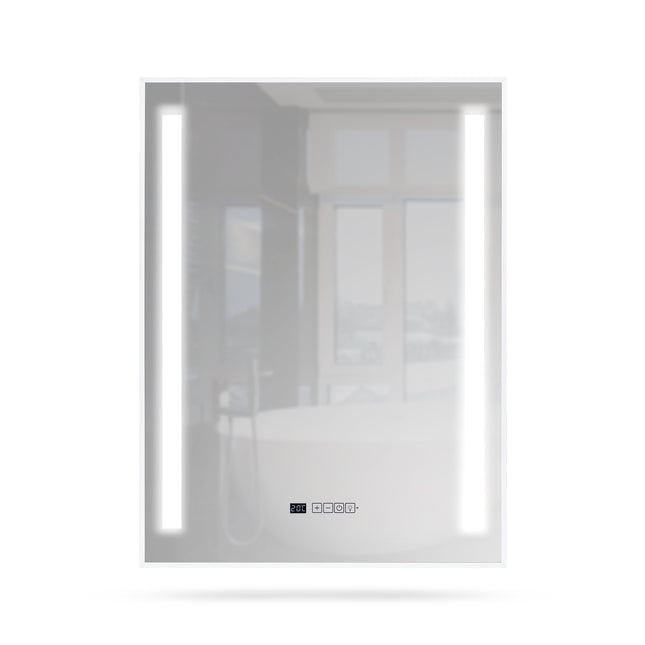


An infrared mirror combines a mirror with a heating panel. Choose the required heat output first, then the size, lighting and controls. To reduce mist on an existing mirror, explore separate anti-fog film.
Heated mirror or separate film?
An infrared mirror adds heat to the room. Its warmed surface can also reduce condensation during use. Separate film warms part of an existing mirror to improve visibility. It does not replace bathroom heating sized for the room. Ventilation remains necessary to remove moisture.
Compare two different mirror options
| Example | Output and size | Controls and choice |
|---|---|---|
| Termofol TF-LG400 | 400 W · 600 × 800 mm | LED lighting and built-in thermostat; on-device and WiFi controls |
| Ecaros 800 W mirror | 800 W · 60 × 120 cm | Wall-mounted mirror panel; choose suitable external room controls |
These are two examples from the range. Open the product for the current version, price and full details. A larger mirror or higher output does not automatically make it right for your room.
Choose the size, lighting and position
- Measure the free wall above the basin, allowing for taps, lighting and fixings.
- Check whether the model permits horizontal or vertical mounting.
- Assess LED lighting separately: light colour, controls and light output vary by model.
- Have the mounting position, power supply and controls checked against the model’s manual.
Can an infrared mirror heat the whole bathroom?
That depends on heat loss, output and position. One mirror panel may be enough, or additional bathroom panels may be needed. Do not use mirror width as the only measure of heating capacity.
Explore all electric bathroom heating or follow the bathroom planning guide.